
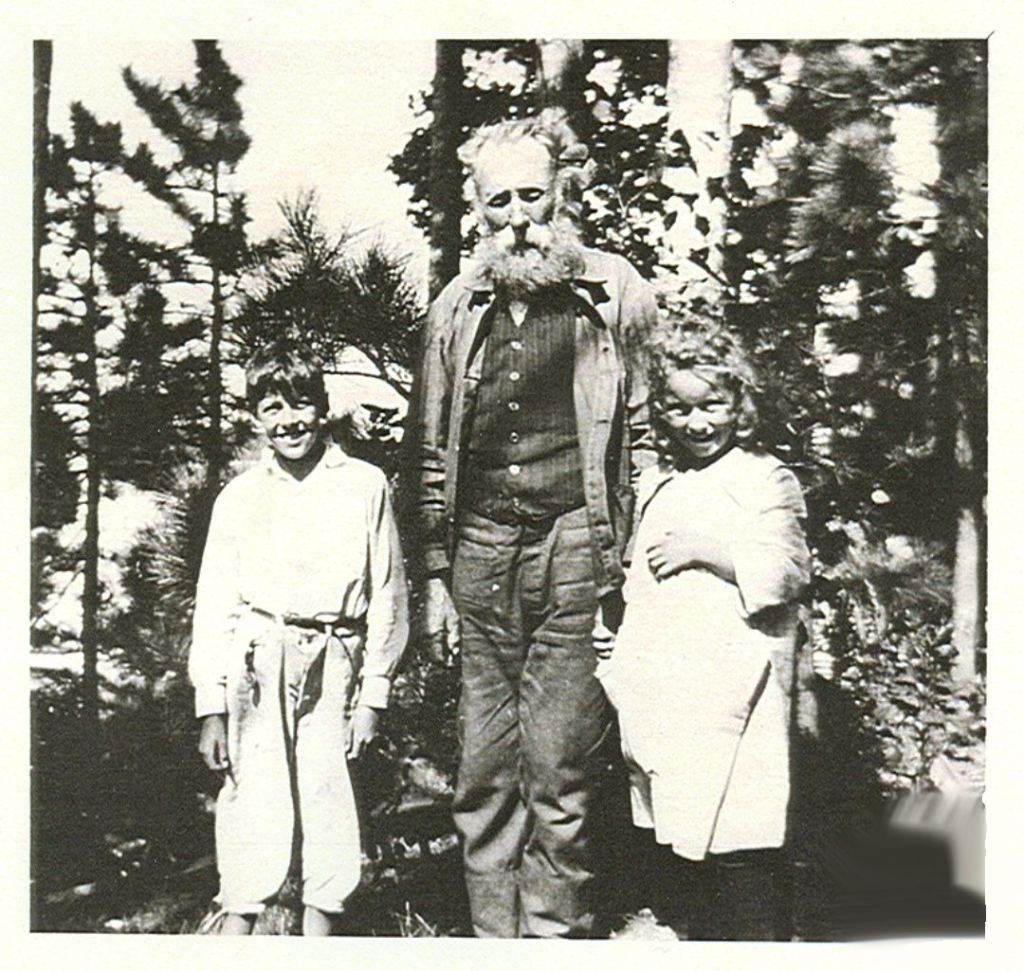
✦ ✦ ✦
The Melang Family
From the Shores of East Prussia
to the Heartland of Wisconsin
⸻ A Chronicle of Faith, Courage, and Family ⸻
Compiled from the 1942 manuscript
“My Mother’s Story as She Told It to Me”
by Edna Blank Carbeille
Enhanced with historical records, family testimony, and descendant research
✦ ✦ ✦
Dedicated to
All who crossed oceans in faith
All who built new homes from old dreams
And all who keep their stories alive
Prologue: A Voice from 1942
On January 23, 1942, in Wausau, Wisconsin, Edna Blank Carbeille sat down to write her mother’s story. The world was at war. Young men from Wisconsin farms were boarding ships bound for distant shores—just as their grandfather had done seventy-six years before. In that moment of uncertainty, she reached back to preserve what mattered most: the story of how her family came to be.
Edna’s mother was Mathilda Melang Blank, born Friederike Mathilde Melang in Klein Marwitz, Prussia, on October 9, 1853. Mathilda was just thirteen years old when she crossed the Atlantic Ocean with her family. Her youngest siblings, Bertha and Gustav, were even younger—and it was from their memories, combined with her own, that the family’s epic story emerged.
What follows is that story, enriched with historical research, official records, and the voices of those who lived it. This is the tale of the Melang family: their Old World origins, their reasons for leaving, their perilous journey, and their new life in the American wilderness.
⸻ PART I ⸻
The Old World
Chapter 1: Gumbinnen—On the Edge of the Empire
A Child Born in East Prussia
On September 10, 1818, in the town of Gumbinnen, East Prussia, a baby boy was baptized in the French Reformed church of Gumbinnen Neustadt. His name was Johann Ludwig Melang.
Gumbinnen was no ordinary town. It sat on the eastern frontier of Prussia, a garrison city established by King Friedrich Wilhelm I in 1724 to anchor Prussian power in the borderlands. The town’s French Reformed church—where baby Ludwig was baptized—testified to Gumbinnen’s unusual character: it was home to French Huguenot refugees, German Protestants, and a mix of peoples who had fled westward seeking religious tolerance.
The Melang family was part of this mosaic. Their surname—rare even then—marked them as outsiders who had come from somewhere else, perhaps from the Low Countries or northern German territories. They were French Reformed in faith, speaking German but worshiping in the tradition of Calvin’s Geneva.
Ludwig grew up in a world shaped by military drums and merchant fairs, Lutheran hymns and Calvinist prayers, the creak of wagon wheels on the road east to Russia and west to Berlin. This was a world of borders—geographical, linguistic, religious—and the Melang family would cross many of them.
The Locksmith’s Trade
The Melang family carried a precious inheritance: the trade of locksmithing, passed down through generations. By the time Ludwig reached adulthood, he represented the third generation of locksmiths in the family line.
In 19th-century Prussia, locksmithing was no simple craft. It required years of apprenticeship to master the mathematics of pin-tumbler mechanisms, the metallurgy of hardened steel, the precision filing that could mean the difference between a lock that held fast and one that failed. A locksmith made keys for manor houses and merchant strongboxes, repaired door latches for farmers, and crafted the intricate mechanisms that protected valuables in an age before banks were common.
Family memory describes Ludwig as “a very skillful locksmith” whose craft commanded respect. This trade gave the Melang family economic stability and social standing. A skilled locksmith could find work in any town, earn a decent living, and pass his knowledge to his sons. It was craft as capital, knowledge as wealth—portable assets that would prove invaluable in the years to come.
Marriage and Family
Ludwig married Henriette, believed to be of the Riel family. Family lore claims that Henriette’s mother was of noble birth, raised in a castle, who married a schoolmaster against her parents’ wishes and was disowned. Whether this story is true or embellished by time, it speaks to Henriette’s character—she was remembered as “blue-eyed, blond, stately, dignified,” maintaining her grace and standards even in poverty.
Together, Ludwig and Henriette built a life in the small towns of East Prussia, welcoming eleven children between 1835 and 1855:
- Emelie (born 1835) — eldest daughter
- Leberecht (born 1840) — eldest son
- Alvina (March 4, 1842 – June 12, 1847) — died at age 5
- August (born 1843) — second son
- Bernhart (October 11, 1845 – May 26, 1848) — died at age 2
- Auguste Emilie (born May 9, 1838, Florkehmen)
- Richard (born January 6, 1848) — tall, blue-eyed, well-liked (My Third Great Grandfather)
- Loine (January 23, 1850 – July 18, 1850) — infant death
- Bertha Leopoldine (born 1852)
- Friederike Mathilde (born October 9, 1853, Klein Marwitz) — the storyteller
- Johann Gustav (born July 8, 1855) — the youngest
The family moved several times within East Prussia—from Gumbinnen to Florkehmen to Klein Marwitz to Rubnochin to Hertsfeld—following work, seeking opportunity, building their life one town at a time. Ludwig “frequently moved the family seeking prosperity—but never quite found it.”
A Conversion in Elbing
On March 24, 1856, Johann Ludwig Melang made a momentous decision. In the city of Elbing, he converted from the French Reformed church to the Baptist confession.
This was no small matter. In 1856, being Baptist in Prussia meant joining a religious minority often viewed with suspicion by both Lutheran and Reformed establishments. Baptists practiced believer’s baptism (not infant baptism), emphasized personal conversion, and maintained a certain separation from state churches. They were spiritual cousins to the Mennonites—sharing commitment to adult baptism and congregational autonomy—though Baptists did not share the Mennonite tradition of absolute pacifism.
Why did Ludwig convert? The historical record is silent, but this decision would shape the family’s identity and, ultimately, their destiny. It was a faith conviction strong enough to carry them across an ocean.
Chapter 2: Life in the Prussian Village
The Home
The Melang family home, like most village houses, was built for endurance rather than comfort. The structure combined living quarters and barn under a single roof—practical in harsh winters when animals needed protection and their body heat helped warm the house.
Inside, the space was “mostly one large unpartitioned space.” Privacy was created not by walls but by hanging curtains. The floors throughout were rough wooden boards, except in the kitchen where hard-packed clay served as flooring. At the heart of the home stood the large clay stove, used for both heating and cooking.
Despite the simplicity, Henriette maintained standards. She was remembered as “always neat, stylish even when poor,” believing in “good shoes even with simple dresses.” She was proud of her lineage and taught her children to carry themselves with dignity regardless of their circumstances.
The Land and Work
Ludwig owned ten acres—unusual for a craftsman, as most land was held by farmers. The soil was “very poor and sandy,” but “since my father had two cows and a horse, he was able to keep our land somewhat fertile.” They grew potatoes, rye, and sugar beets in their fields, and cultivated an orchard with apple, pear, cherry, and plum trees.
The fields of the village were “unbroken by separating fences, thus making the picture continuous, like a great beautiful patchwork quilt.” This created a communal landscape where everyone’s labor was visible to everyone else.
Days began early. “People rose with the first glowing signs of dawn, and soon the village was astir with life.” Children as young as six worked in the fields, carrying hoes and rakes, herding geese, sheep, and swine. Young Gustav remembered with pride the day he was considered “man enough” to help wind the village clock—a mechanism several centuries old, located in a tower fifty feet high, driven by heavy stone weights on long chains.
Daily Life and Household Labor
Bread Baking
Every two weeks, Henriette baked bread in the large clay oven. The process began by building a fire inside the oven, carefully removing the coals, then inserting the dough to bake into large round loaves.
But there was an important detail: “Whenever she baked bread, several extra large loaves were always baked for the beggars.” This wasn’t charity from surplus—it was planned compassion, extra loaves calculated into every baking session.
The Monthly Washing
Once a month, all the family’s clothes were hauled by two-wheeled cart to the lake. Using homemade green soap made from lye and fat, the clothes were beaten and rubbed in wooden tubs, then sun-dried on the grass. Linens were left on the grass to bleach naturally white. Finally, everything was ironed outdoors using a stone-filled mangle.
Textile Production
From field to garment, the family produced their own textiles. Flax was grown, harvested, retted, broken, scutched, hackled, spun, woven, and sewn into aprons, dresses, shirts, and undergarments. Sheep were sheared, the wool cleaned, carded, spun, and knitted into stockings, mittens, and garments. Nothing was wasted. When items were lost or worn out, new ones were sewn from materials stored in wooden chests.
Food Preservation
Every summer, the family preserved fruit for winter—but not by canning. Instead, apples, pears, cherries, and plums from their orchard were cut into pieces, spread on wooden boards, and placed in full sun. “Every day it had to be turned until all the moisture was evaporated.” The dried fruit was then stored in containers for winter use.
This dried fruit became the foundation for Glutenbakerren Suppe, described as “a treat deluxe.” The dried fruit was placed in a large iron kettle and stewed all day until tender and fragrant. Then dumplings made from eggs, milk, and flour were added. Sugar was broken from a cone and added along with cinnamon. The result was a winter delicacy that transformed summer’s abundance into comfort on cold nights.
The Village Magistrate
Ludwig held a public position as village magistrate, responsible for collecting taxes and distributing food and fuel to the poor. But he did more than his duties required—he “often gave from his own stores” to help those in need.
This generosity was a family value. Henriette’s “heart always went out to others.” Every day, beggars arrived at their door—often singing or wailing, a recognized sound in the village. A plate was kept ready during meals for hungry children. Milk was given when children were present. Food was packed into baskets and delivered personally to needy families.
Mathilda, watching as a child, never forgot: “The look of gratitude in their large sunken eyes left an everlasting impression upon my child mind.”
This wasn’t occasional charity—it was household infrastructure. Compassion was scheduled, planned, budgeted into their lives even when they themselves struggled. Henriette would remind her children “of how thankful we ought to be for owning our land and not being serfs.”
Childhood Memories: Joy and Wonder
Not everything was hardship. Mathilda’s memories preserved moments of pure childhood joy:
The Orchard:
“I ran to the orchard just as fast as chubby four-year-old legs could carry me. Soon two noses and four rosy cheeks were buried in half-eaten pears, faces sticky with juice.”
Birds and Nature:
“I never tired of marveling over the oriole’s hanging nest.” She watched larks spiral into the sky, witnessed orioles weaving their intricate nests, and waited each spring for the birds’ return—a sign of hope renewed.
The Spring Song:
“I loved to sing the spring song,” Mathilda remembered. The song became a family treasure, preserved across generations:
Alle Vögel sind schon hier,
Alle Vögel, alle;
Amsel, Drossel, Fink und Star
Und die ganze Vogel Schar
Bringen uns ein frohes Jahr
Voller Heil und Segen.
(All the birds are here, / All the birds, all of them; / Blackbird, thrush, finch and starling / And the whole bird flock / Bring us a happy year / Full of blessing and grace.)
This song, sung by a child in 1860s Prussia, remembered seventy years later, written down in 1942, reaches us today—a small miracle of memory and love.
School: The Pedagogy of Fear
School was mandatory until age fourteen, but it was no place of joy. The one-room schoolhouse had long wooden benches and no desks—just planks. And the teaching method was harsh: “To strike fear into the child’s heart… was the rule.”
Mathilda never forgot one particular day: “One bright, sunshiny day when the teacher called the class of little beginners to the windows and bade them look out at the clear blue sky and count the stars…”
“The frightened little ones strained their eyes, their faces blanched, their little mouths grew dry, their lips twitched uncertainly, and hot tears welled up in tear-filled blue and brown eyes. No tears could afford relief.”
The teacher asked children to do the impossible—not to teach astronomy, but to teach absolute obedience regardless of reality. “I trembled with fear when I was called,” Mathilda remembered.
Despite the harsh methods, learning mattered. Children took pride in writing letters carefully by hand and doing their work correctly. These skills—literacy, discipline, persistence—would serve them well in America.
Hardship and Loss
Three of the eleven children died young: Alvina at age five, Bernhart at age two, and Loine as an infant under six months old. The grief of these losses was compounded by the family’s constant moves and economic struggles.
But the worst trauma was the fire. Mathilda’s earliest memory was “being carried through burning flames by mother” when the sugar factory in Klein Marwitz burned, destroying the family’s living quarters along with it. There were no fire departments. “The entire structure burned to the ground.”
The fire triggered mass displacement. Villagers fled “carrying possessions on their backs, pushing wheelbarrows loaded to the breaking point, holding children.” This catastrophe was one more reason why staying in Prussia seemed increasingly untenable.
Chapter 3: The Shadow of War and the Call to Leave
A Son Goes to War
Leberecht, the eldest son, served in the Prussian army. This fact, preserved in family memory, tells us much about the family’s position in society. Despite their Baptist faith, the Melangs were not absolute pacifists like Mennonites. Leberecht likely served his required term in the early 1860s as tensions built toward the Austro-Prussian War.
But military service came at a cost. In the 1860s, Prussia was transforming into a militarized state, and universal conscription was expanding. For a family with multiple sons, the prospect of repeated military service—and the wars that inevitably followed—weighed heavily on Ludwig and Henriette.
The Brothers Go Ahead
At some point in the early-to-mid 1860s, Leberecht and August emigrated to America, going ahead to prepare the way for the rest of the family. This was a common pattern: young men would go first, find work, secure land or lodging, and send word back when the family could follow.
Their letters from Wisconsin must have painted pictures of possibility: land available for homesteading, religious freedom guaranteed, opportunity for craftsmen, communities of German-speakers where language and customs would not be lost. They must have said, “Come. We have prepared a place for you.”
1866: The Year of Decision
In 1866, events accelerated. The Austro-Prussian War erupted in June, pitting Prussia against Austria and several German states. Prussia won decisively in just seven weeks, but the war’s aftermath brought permanent changes.
After 1866, universal military conscription became strictly enforced throughout German territories. The link between citizenship and military service was made explicit and mandatory. For families with young sons—like the Melangs, with Richard now eighteen and Gustav still young—the future was clear: more wars, more conscription, more years of service in an increasingly militarized state.
For Ludwig and Henriette, the decision crystallized. Their eldest sons were already in America. Their younger children were still young enough to adapt to a new country. Ludwig’s locksmith skills would transfer anywhere. Their Baptist faith would find welcome among America’s Protestant communities. And the letters from Wisconsin promised a future better than what Prussia could offer.
The Family Vote
Ludwig didn’t make the decision alone. As Mathilda remembered: “Father asked us if we wished to go. We answered in chorus.”
The children were included in this life-altering choice. The family would move as a collective unit, and the answer was unanimous. Their reasoning was clear: “To leave meant sorrow and misery behind, and hope for happier and freer lives.”
Leaving the village meant permanent severance from everything familiar. The clock tower, the church, the trees, the fields—all would be left behind, never to be seen again. It was understood as irreversible, a soul-departure from the only world they’d known.
But on the morning of departure, hope was stronger than grief. As Mathilda remembered: “It promised to be a lovely summer day with the first rosy flush of dawn tinting the eastern sky and driving the gray mist away before its progressive advance…”
A beautiful morning. New beginnings. America.
⸻ PART II ⸻
The Crossing
Chapter 4: Hamburg—Gateway to the New World
Arrival at the Port
In July 1866, the Melang family arrived in Hamburg, Germany’s great emigration port. With them came trunks and cases containing everything they could carry: clothing, bedding, precious family possessions, and most importantly, Ludwig’s locksmith equipment—the hammers, files, vises, and specialized tools that represented three generations of craftwork.
Hamburg in 1866 was a city transformed by emigration, having become Europe’s primary departure point for millions fleeing east to west: Germans, Poles, Russians, Czechs, Jews, Protestants, Catholics—all streaming toward the Atlantic and the promise of America. The city’s emigration halls processed hundreds of families each day, checking papers, arranging passage, sending them on their way.
The passenger lists recorded their names with Prussian efficiency:
L. Melang, Male, Age 49, German, from Mark, Prussia—destination USA
Traveling with Ludwig were:
- Henriette (his wife)
- Auguste Emilie (age 28)
- Richard (age 18) (My Third Great Grandfather)
- Friederike Mathilde/Mathilda (age 13)
- Johann Gustav (age 11)
Emelie, the eldest daughter, remained in Prussia—unable to marry due to dowry imbalances, unable to emigrate with the family. It was another painful separation in a journey full of them.
Friday, July 20, 1866: Boarding the Germanic
On Friday, July 20, 1866, the Melang family boarded the sailing steamship Germanic in Hamburg harbor.
The Germanic was a hybrid vessel—equipped with both sails and a steam engine—representing the transition between old sailing ships and modern steamships. She could make the Atlantic crossing in favorable conditions, though the journey was never predictable. Storms could delay passage for days. Calm winds could leave a ship becalmed. The Atlantic in summer was generally safer than winter, but it was never truly safe.
The family was assigned to steerage—the lowest deck of the ship, where hundreds of emigrants crowded together in dim, airless compartments. They brought their own bedding and food supplies (supplemented by ship’s rations), and their own fortitude for what lay ahead.
Imagine the scene: Mathilda, just thirteen years old, standing at the rail as Hamburg’s spires faded into the distance. Gustav, only eleven, perhaps crying for the world he was leaving. Richard, eighteen and strong, trying to be brave. Emilie, twenty-eight, wondering if she would find a husband in America. Mother Henriette, holding the family together. And Father Ludwig, forty-eight years old, carrying the weight of this enormous decision.
They would never see Prussia again.
Three Weeks at Sea
The crossing took “a little over three weeks”—from July 20 to August 6, 1866. We can only imagine what those weeks held.
Life in steerage was brutal. Families crowded together in berths stacked three high. The air was thick with the smell of unwashed bodies, seasickness, and the ship’s bilge. Meals were simple: ship’s biscuit, salted meat, occasional vegetables. Fresh water was rationed. Privacy was impossible. Disease spread easily in such conditions.
But there were also moments of strange beauty. Standing on deck in the evening, watching the sun sink into an endless ocean. Hearing other German families singing hymns on Sunday. Sharing stories with fellow travelers—Poles heading to Chicago, Saxons bound for Missouri, Prussians like themselves seeking Wisconsin.
Perhaps the Melang family sang too. Perhaps Ludwig led them in Baptist hymns learned in Elbing. Perhaps they sang the old German songs their grandparents had known, or Mathilda’s beloved spring song about the birds. Music was one of the few comforts they could carry across the sea.
August 6, 1866: Landfall
On August 6, 1866, the Germanic entered New York harbor.
The sight of the American coast must have brought overwhelming relief. Three weeks of ocean, three weeks of uncertainty, three weeks of wondering if they’d made the right choice—all ending with the solid reality of land.
New York in 1866 was a city still reeling from the Civil War, which had ended just sixteen months earlier. The city was crowded, chaotic, expensive, and overwhelming to newcomers. But the Melang family did not linger. They had a destination: Wisconsin, where Leberecht and August waited.
From New York, they traveled by rail—the great iron roads that now connected the East Coast to the Midwest. Days of train travel through Pennsylvania, Ohio, Illinois, and finally Wisconsin. The journey from Hamburg to their new home had taken approximately one month.
They had crossed an ocean. They had left the Old World behind. Now they would build their lives in the New.
⸻ PART III ⸻
Wisconsin
Chapter 5: Amherst—Building a New Life
Arrival in Portage County
The Melang family settled in Amherst, Portage County, Wisconsin—a small town in the central part of the state, surrounded by forests and farms.
Amherst in the 1860s was still frontier country. The land had been cleared only recently from dense pine forests. German-speaking families were scattered throughout Portage County, creating pockets of linguistic and cultural familiarity in the American wilderness. There were Lutheran churches, Reformed churches, and small Baptist congregations where Ludwig and Henriette could worship in their own tradition.
The family reunited with Leberecht and August, who had already established themselves. Perhaps the brothers had secured land, found work, or built a small cabin where the family could shelter. However they prepared, the reunion must have been joyful—a family split between continents now whole again.
Ludwig the Locksmith in America
In Wisconsin, Ludwig’s locksmith skills remained valuable. Pioneer communities desperately needed skilled craftsmen. Farmers needed hinges repaired, wagon wheels fixed, door latches made. Stores needed locks for their strongboxes. Homes needed keys.
A locksmith could set up shop with relatively little capital—just his tools, an anvil, a small forge, and a workspace. Ludwig likely worked from home at first, taking jobs from neighbors and townspeople, building his reputation one satisfied customer at a time.
Richard, now in his early twenties, worked alongside his father, learning the trade that had sustained three generations. The craft was passing from father to son once more, now on American soil.
The 1880 Census: A Snapshot of Success
By 1880, the family had been in Wisconsin for fourteen years. The census of that year recorded:
- Ludwig Melang, age 62, locksmith
- Henriette Melang, his wife
- Other family members in nearby households
Remarkably, Portage County census records for 1880 show fourteen Melang families living in Wisconsin—representing 64% of all Melang families in the entire United States. This extraordinary concentration demonstrates that the Melangs were not isolated individuals but part of a genuine family network, supporting each other, maintaining connections, building community together.
They had come to Wisconsin together. They were building their American future together.
Ludwig’s Final Years
Johann Ludwig Melang died on June 1, 1884, in Amherst, Wisconsin. He was sixty-five years old. He was buried in Greenwood Cemetery in Amherst, where his grave can still be found.
He had lived to see his children established in America. He had practiced his craft on a new continent. He had helped build a German Baptist community in Wisconsin. He had crossed an ocean and made a new world.
His legacy would continue through his children, grandchildren, and all the generations to come.
Chapter 6: The Children Build Their Lives
Richard Melang and Maria Ellis
Richard Melang (1848–1925), who had crossed the ocean as an eighteen-year-old, married Maria Ellis, a woman of English or Welsh descent. Their union represented the beginning of American integration—a German locksmith’s son marrying into an Anglo-American family.
Richard continued the locksmith tradition in Wisconsin. He and Maria had a daughter, Julia Melang, born April 22, 1875.
Mathilda: Keeper of Memory
Friederike Mathilde Melang (1853–1902), known as Mathilda, became the keeper of family memory. She married a man named Blank, and together they raised their family in Wisconsin. It was Mathilda who told her story to her children, who preserved the memories of Prussia, of the ocean crossing, of building a new life in America.
When Mathilda looked back on her life, she could say with gratitude: “Now as I look upon it all in retrospect, I am happy and thankful to be in the land of the free, the greatest country upon earth—America!”
Mathilda died in Amherst on March 15, 1902, at age forty-eight. But her voice lived on through her daughter Edna, who wrote it all down forty years later, preserving the memories for generations yet unborn.
Gustav the Youngest
Johann Gustav Melang (1855–1945), the baby of the family who crossed the ocean at age eleven, lived the longest of all the siblings. He died in Wausau, Wisconsin, on September 8, 1945, at the age of ninety—having witnessed the transformation of America from Civil War frontier to World War II superpower.
Gustav’s memories, combined with those of his sister Bertha, became crucial sources for the 1942 family manuscript. He was the last living link to the old country, the last who remembered Prussia, Hamburg, and the Germanic‘s crossing.
Chapter 7: Julia, Herbert, and the American Tapestry
Julia Melang Meets Herbert Nelson
Julia Melang (1875–1915), daughter of Richard and Maria, represented the first generation born fully in America. She grew up speaking English as her first language, attended American schools, and lived in a world her grandparents could barely have imagined.
Julia married Herbert Nelson, and their union wove together three immigrant narratives:
- German-Prussian (through Julia’s Melang line)
- Norwegian (through Herbert’s father Edward Nelson)
- Colonial New England (through Herbert’s mother Olive Howe)
Herbert’s father, Edward Nelson, was a Norwegian immigrant who had come to Wisconsin seeking the same opportunities that drew the Melangs. Like the Germans, Norwegians flooded into Wisconsin in the mid-19th century, drawn by farmland, timber work, and the promise of religious freedom.
Herbert’s mother, Olive Howe, daughter of Ichabod Howe, traced her lineage back to colonial Massachusetts—to the District of Maine before it became a state in 1820. The Howe family had been in America for generations, their roots reaching back to the 1600s.
When Julia Melang married Herbert Nelson, she was marrying into deep American history—families who had crossed the Atlantic centuries before her grandparents, who had fought in the Revolution, who had cleared New England forests and fished New England waters.
Isadore Delia Nelson: A Life Remembered
Julia and Herbert had a daughter, Isadore Delia Nelson (died January 31, 1986).
Family memory preserves Isadore as a formative presence, remembered for encouraging literacy and learning, providing books, gifting a first dictionary, and maintaining a garden tended with family assistance during the summer of 1983. (My Memory)
These details—small, specific, loving—tell us who Isadore was. She was an educator at heart, someone who believed in books and words and knowledge. She was a gardener, someone who understood growing things. She cooked from a wood burning stove till the mid 1980’s. She was generous, sharing her love of learning with younger generations.
The summers of 1983 thru 1986—she was still tending her garden with family help (Me!), still teaching, still nurturing. These are the memories that survive: not just dates and documents, but books given, words shared, earth tended together.
Julia’s Death and the Breaking of Chains
Julia Melang Nelson died on December 4, 1915, at the age of forty. Her daughter Isadore was still young. The cause of her death is not recorded in our documents, but her passing broke a direct chain of memory.
Julia’s grandmother Henriette had known Prussia. Julia’s grandfather Ludwig had been born in Gumbinnen. Julia’s father Richard had crossed the Atlantic at eighteen. Julia herself was born in Wisconsin, the first American-born Melang.
When Julia died in 1915, a living link to the immigrant generation was lost. But the stories lived on—passed to Isadore, who would pass them forward, generation by generation, until they reached the present day.
Chapter 8: Russell Eaton and the Modern Generations
Isadore Delia Nelson married Ernest Ervin R. Eaton, and they had a son, Russell Eaton.
Russell represents the sixth generation from Johann Ludwig and Henriette—the generation that grew up in 20th-century America, that lived through the Great Depression, World War II, the Cold War, and the transformation of Wisconsin from frontier to modern state.
By Russell’s generation, the Melang name had blended with Ellis, Nelson, Howe, Eaton—a tapestry of surnames reflecting German, English, Norwegian, and Colonial American roots. This is the American story writ small: the blending of nations, the creation of something new from many old threads.
And from Russell, the line continues to the present day—eight generations from Johann Ludwig (with my children and grandchildren, it’s 10 generations), seven generations from Gumbinnen to Wisconsin to Michigan, seven generations of family memory preserved and passed forward.
Epilogue: What They Carried
On July 20, 1866, when the Melang family boarded the Germanic in Hamburg, they carried more than trunks and tools.
They carried Ludwig’s locksmith skills—three generations of craft knowledge, portable as thought itself.
They carried their Baptist faith—a conviction strong enough to make them leave their homeland.
They carried family bonds—the determination to stay together, to help each other, to build community in a new land.
They carried language and song—German hymns and old ballads, the sound of home in their throats, and Mathilda’s spring song about the birds bringing a happy year full of blessing.
They carried memory—of Gumbinnen’s streets, of Klein Marwitz’s fields, of orchard pears sticky with juice, of orioles’ nests and larks spiraling skyward, of the faces of those left behind.
They carried compassion—the habit of baking extra bread for beggars, of keeping a plate ready for hungry children, of giving from their own stores even when they had little.
And they carried hope—the belief that America would be better, that their children would prosper, that the risk was worth taking.
They were right.
In Amherst, Wisconsin, Johann Ludwig Melang lies in Greenwood Cemetery. His grave is marked, findable, a place where descendants can stand and remember. From that grave, invisible threads stretch forward through seven generations to the present day.
His locksmith tools are gone. The Germanic sailed her last voyage long ago. The Prussian towns of his youth have new names in new countries. The clay stove is cold, the fields are changed, the wooden benches of the schoolhouse long since rotted.
But the story remains.
Thanks to Mathilda’s telling, Edna’s writing, and all those who preserved these memories, we know where we came from. We know what they risked. We know what they built. We know the taste of Glutenbakerren Suppe, the sound of beggars singing, the fear of seeing stars in daylight, the joy of running to the orchard on chubby legs.
We know that Ludwig was skillful and gentle, that Henriette was stately and kind, that they taught their children to be grateful, to be generous, to be brave.
We know the words to the spring song:
Alle Vögel sind schon hier,
Alle Vögel, alle;
Amsel, Drossel, Fink und Star
Und die ganze Vogel Schar
Bringen uns ein frohes Jahr
Voller Heil und Segen.
We are the answer to their hope.
We are the birds that bring the happy year.
We are the blessing they believed in.
✦ ✦ ✦
In memory of all who crossed oceans
In gratitude to all who kept their stories
In hope that we will pass them forward
APPENDIX: The Living Details
Complete extraction of recipes, songs, and daily life practices
from the 1942 Melang family manuscript
🍲 GLUTENBAKERREN SUPPE (Winter Delicacy)
Description: “A treat deluxe”
Ingredients:
- Dried fruit (apples, pears, cherries, plums—home-preserved)
- Eggs
- Milk
- Flour
- Sugar (broken from a cone)
- Cinnamon
Method:
- Place dried fruit in large iron kettle
- Stew all day until tender and fragrant
- Make dumplings from eggs, milk, and flour
- Add dumplings to stewed fruit
- Break sugar from cone and add
- Add cinnamon last
- Serve hot
This dish transformed summer’s abundance into winter comfort—slow-stewed dried fruit with sweet dumplings, cinnamon, and sugar.
🌞 FRUIT PRESERVATION METHOD
Fruits: Apples, pears, cherries, plums (all home-grown)
Method: Sun-drying only (no canning)
Process:
- Pick fruit at peak ripeness
- Cut into pieces
- Spread on wooden boards
- Place in full sun
- Turn daily until all moisture evaporated
- Store in dry containers for winter use
Quote: “Every day it had to be turned until all the moisture was evaporated.”
🥖 BREAD BAKING ROUTINE
Schedule: Once every two weeks
Equipment: Large round pans, clay oven
Method:
- Build fire in clay oven first
- Remove coals carefully
- Insert bread dough into hot oven
- Bake large round loaves
The Compassion Detail: “Whenever she baked bread, several extra large loaves were always baked for the beggars.” This was planned charity, not surplus—extra loaves were calculated into every baking session.
🎵 THE SPRING SONG
Original German:
Alle Vögel sind schon hier,
Alle Vögel, alle;
Amsel, Drossel, Fink und Star
Und die ganze Vogel Schar
Bringen uns ein frohes Jahr
Voller Heil und Segen.
English Translation:
All the birds are here,
All the birds, all of them;
Blackbird, thrush, finch and starling
And the whole bird flock
Bring us a happy year
Full of blessing and grace.
Context: Sung by Mathilda as a child in Prussia, remembered seventy years later and now with me at nearly 170 years, written down in 1942, preserved to today.
“I loved to sing the spring song.”
— Mathilda Melang
🏠 HOUSEHOLD PRACTICES
The Monthly Washing:
- All clothes hauled by two-wheeled cart to the lake
- Washed with homemade green soap (lye and fat)
- Beaten and rubbed in wooden tubs
- Sun-dried on grass
- Grass-bleached for natural whitening
- Ironed outdoors using stone-filled mangle
Textile Production:
- Flax: grown → harvested → retted → broken → scutched → hackled → spun → woven → sewn
- Wool: sheep sheared → cleaned → carded → spun → knitted
- Everything handmade, nothing wasted
Daily Food Items:
- Bread (rye, home-baked every two weeks)
- Milk (from their two cows)
- Potatoes (staple crop)
- Coffee cake (mentioned in care packages)
- Sausages (sent to soldiers)
- Herring or herring juice (the very poor bought only the brine)
- Fresh fruit in season
- Dried fruit in winter
💬 MEMORABLE QUOTATIONS
On Home:
“Inside it was all one large unpartitioned space… rooms were partitioned solely by means of curtains.”
On Compassion:
“Mother’s heart always went out to others.”
“The look of gratitude in their large sunken eyes left an everlasting impression upon my child mind.”
On Daily Life:
“The fields were unbroken by separating fences, thus making the picture continuous, like a great beautiful patchwork quilt.”
On Childhood:
“I ran to the orchard just as fast as chubby four-year-old legs could carry me. Soon two noses and four rosy cheeks were buried in half-eaten pears, faces sticky with juice.”
On School:
“The frightened little ones strained their eyes… no tears could afford relief.”
On America:
“Now as I look upon it all in retrospect, I am happy and thankful to be in the land of the free, the greatest country upon earth—America!”
On the Decision to Leave:
“Father asked us if we wished to go. We answered in chorus.”
📊 FAMILY TIMELINE
- 1818 — Johann Ludwig Melang born, Gumbinnen, East Prussia (September 10)
- 1835-1855 — Eleven children born to Ludwig and Henriette
- 1856 — Ludwig converts to Baptist faith, Elbing (March 24)
- Early-mid 1860s — Leberecht and August emigrate to America
- 1866 — Austro-Prussian War; family decides to emigrate (July)
- July 20, 1866 — Board the Germanic in Hamburg
- August 6, 1866 — Arrive New York harbor
- 1866 — Settle in Amherst, Portage County, Wisconsin
- 1880 — Census shows 14 Melang families in Portage County (64% of all U.S. Melangs)
- June 1, 1884 — Ludwig dies, Amherst, Wisconsin (age 65)
- March 15, 1902 — Mathilda dies, Amherst, Wisconsin (age 48)
- December 4, 1915 — Julia Melang Nelson dies (age 40)
- January 23, 1942 — Edna Blank Carbeille writes down her mother’s story
- September 8, 1945 — Gustav dies, Wausau, Wisconsin (age 90)—last survivor of the crossing
- January 31, 1986 — Isadore Delia Nelson dies
- Present day — Eight (Me) thru Ten generations (My Grandchildren) from Ludwig and Henriette
Based on the 1942 manuscript “My Mother’s Story as She Told It to Me”
by Edna Blank Carbeille
Enhanced with historical records, genealogical research, and family testimony
Revised and compiled December 2025
 TumbleDweeeb
Leave a comment